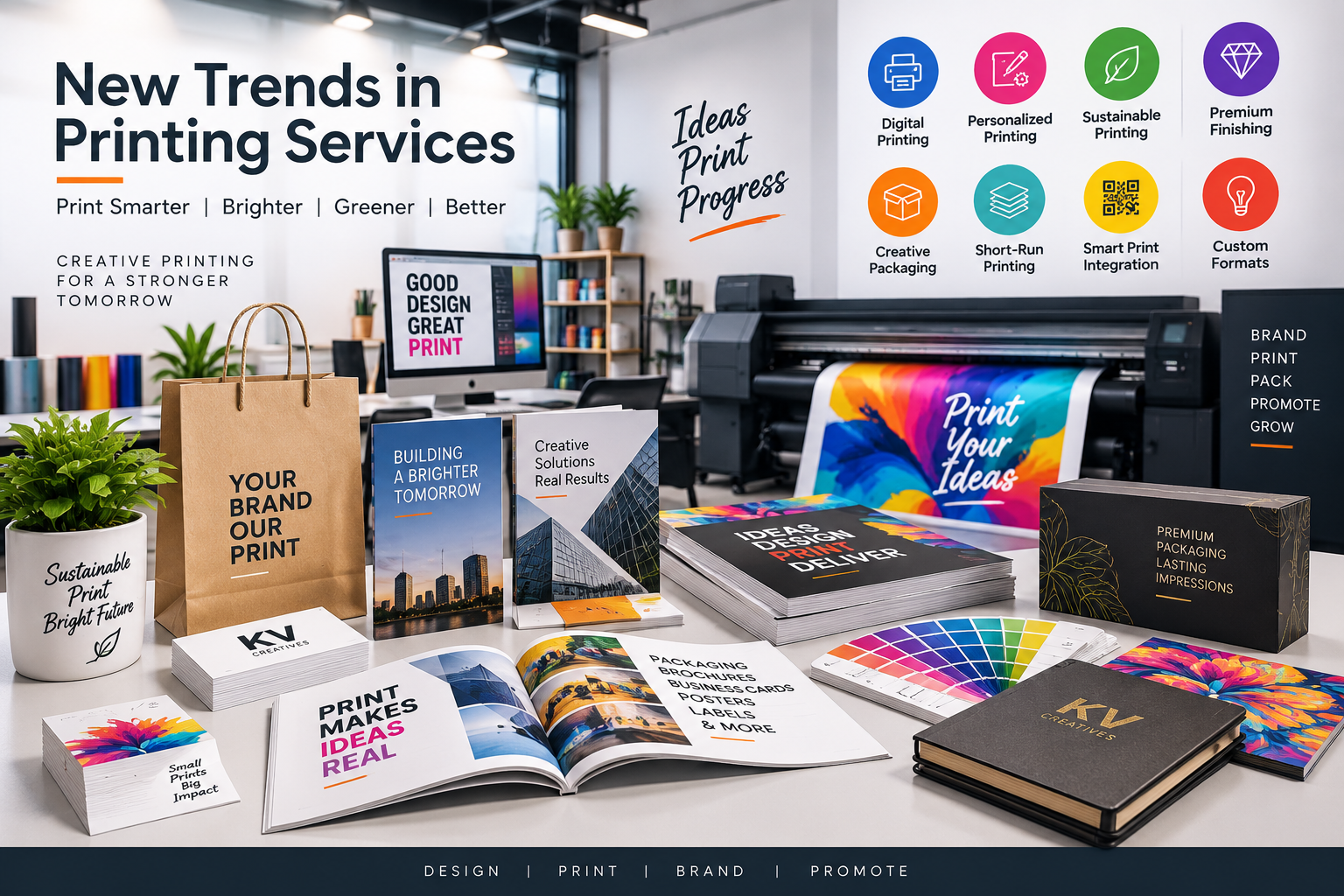
New Trends in Printing Services
Printing continues to play an important role in branding and business communication. While digital marketing has transformed how businesses reach customers, professionally printed materials still provide a physical and memorable way to present a brand.
Modern printing technology is making print materials more creative, personalized, efficient, and environmentally conscious.
Here are some important printing trends businesses should know about.
1. Digital Printing is Growing
Digital printing has made it easier to produce high-quality materials in smaller quantities without the need for traditional printing setups.
Businesses can use digital printing for brochures, flyers, business cards, invitations, posters, labels, and promotional materials.
It is especially useful when businesses need quick turnaround times or customized print runs.
2. Personalized Printing
Customers increasingly respond to communication that feels relevant to them.
Variable data printing allows businesses to customize elements such as names, offers, images, or messages within printed materials.
Personalized brochures, invitations, direct mailers, coupons, and promotional materials can create a more targeted communication experience.
3. Sustainable Printing
Environmental awareness is influencing the printing industry.
Businesses are exploring recycled papers, responsibly sourced materials, eco-friendly inks, reduced packaging, and efficient production methods.
Choosing sustainable printing options can help businesses reduce unnecessary environmental impact while maintaining professional presentation.
4. Premium Finishing and Special Effects
Print is becoming more visually and physically engaging through creative finishing techniques.
Options such as:
- Spot UV
- Foil stamping
- Embossing
- Debossing
- Die cutting
- Laminations
- Textured papers
can give business cards, packaging, brochures, invitations, and promotional materials a distinctive appearance.
5. Creative Packaging
Packaging has become an important part of brand communication.
Custom boxes, labels, sleeves, tags, and other printed packaging materials allow businesses to communicate their identity directly through the product experience.
Good packaging combines practical information with strong visual design.
6. Short-Run and On-Demand Printing
Businesses do not always need to print large quantities at once.
Short-run and on-demand printing allow companies to produce materials according to their current requirements.
This can be useful for seasonal campaigns, events, product launches, limited promotions, and frequently changing marketing materials.
7. Smart Print and Digital Integration
Print and digital marketing are increasingly working together.
QR codes, NFC technology, personalized URLs, and other interactive elements can connect printed materials with websites, videos, online forms, social media pages, and digital campaigns.
This creates a bridge between physical marketing and digital experiences.
8. Customization and Creative Formats
Modern printing allows businesses to experiment with different sizes, shapes, materials, and formats.
From unique business cards and creative brochures to custom labels and promotional displays, customized printing can help a brand stand out.
The key is to choose a format that supports the communication objective rather than using special effects simply for decoration.
Conclusion
The printing industry is evolving through technology, personalization, sustainability, creative finishing, and digital integration.
For businesses, the right combination of design, material, printing technology, and finishing can turn an ordinary printed item into a valuable brand communication tool.
At KV Creatives, we combine creative design and printing solutions to help businesses create professional and memorable marketing materials for both print and digital platforms.
